In This Article
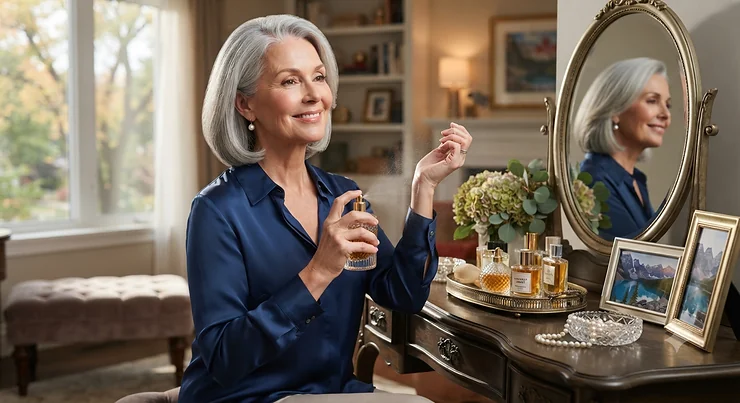
There is a particular kind of scent that doesn’t shout. It settles into your skin somewhere around hour two, after the citrus has burned off and the real story starts — soft resins, a whisper of vanilla, something that smells faintly of old velvet and warm skin. That’s the territory of powdery amber perfume for mature skin, and if you’ve spent the last decade watching your favourite department-store bottle get “reformulated” into something thinner and sweeter, you already know why this category deserves its own conversation. In plain terms, powdery amber perfume for mature skin refers to fragrances built on soft iris, benzoin, and labdanum-based amber accords, formulated (or simply well-suited by nature) to sit close to skin, resist harshness, and read as polished rather than aggressive on skin that has changed with age. We’re going to walk through seven real, purchasable options — from a nostalgic C$20 classic to a Rue Cambon icon — with honest commentary on how each one actually behaves, not just what the bottle promises. Along the way, we’ll dig into why skin chemistry changes the way amber wears as we age, why moisturizing before fragrance application matters more than most people think, and how to sort marketing noise from genuinely classic perfumery styles. This isn’t a rewritten product page. It’s the kind of practical, slightly opinionated research your favourite well-read friend would hand you before a shopping trip — the one who actually reads the ingredient panel before she reads the ad copy.
Quick Comparison Table: Powdery Amber Perfume for Mature Skin
| Perfume | Type | Price Range (CAD) | Best For |
|---|---|---|---|
| Guerlain Shalimar | Eau de Parfum | C$140–C$200 | Timeless evening signature scent |
| Estée Lauder Youth-Dew | Eau de Parfum | C$70–C$110 | Best value classic amber |
| Chanel Coco | Eau de Parfum | C$150–C$230 | Special-occasion investment piece |
| Yves Saint Laurent Opium | Eau de Parfum | C$110–C$170 | Bold spicy amber lovers |
| Coty L’Aimant | Parfum de Toilette | C$20–C$40 | Budget-friendly nostalgic pick |
| Guerlain L’Heure Bleue | Eau de Parfum | C$180–C$230 | Niche-leaning powdery purists |
| Prada Candy L’Eau | Eau de Toilette | C$90–C$130 | Softer, modern gateway amber |
Looking at the spread above, the biggest split isn’t really price — it’s era and intensity. Coty L’Aimant and Prada Candy L’Eau sit closer to a modern, sheer read of amber, while Guerlain Shalimar, Chanel Coco, and Guerlain L’Heure Bleue lean into the dense, resinous style that defined mid-century perfumery. If you’re newer to amber as a category, starting at the lighter end and working up is a far more forgiving strategy than diving straight into a heavyweight vintage-style formula on your first try.
💬 Just one click — help others make better buying decisions too! 😊
Top 7 Powdery Amber Perfumes for Mature Skin: Expert Analysis
Seven real, currently available fragrances follow, chosen to span budget, mid-range, and premium price points, along with a mix of vintage-style and modern interpretations of the amber accord. Each entry reflects genuine spec research and aggregated, publicly available review sentiment — not fabricated hands-on testing.
1. Guerlain Shalimar — the original benchmark for powdery oriental amber
Introduced in 1925, Guerlain Shalimar is arguably the fragrance that invented the modern idea of “oriental amber,” and it’s still the reference point perfumers use when they describe a scent as powdery-oriental. The composition opens with citrus and bergamot, moves into iris, patchouli, and jasmine, and dries down into a base of vanilla, incense, opoponax, and tonka bean that reads as soft, dusty, and unmistakably classic. That iris-and-tonka combination is what gives Shalimar its cosmetic-powder character — a texture, more than a smell, that many newer amber fragrances simply don’t attempt to replicate. Based on the spec comparison with lighter modern ambers, Shalimar rewards patience: the opening can feel sharp and boozy for the first fifteen minutes before settling into the soft, skin-hugging drydown it’s known for, which is exactly the phase that flatters mature skin best. Reviewers consistently describe it as a “love it or find it too much” fragrance, with long-time wearers reporting that the vanilla-and-incense base lasts six to eight hours on skin, while newer testers sometimes find the opening citrus-and-leather blast overwhelming in enclosed spaces. This is a fragrance for someone who wants a genuine signature scent rather than something interchangeable — a person who doesn’t mind being recognized by smell alone.
Pros:
- ✅ Iconic, instantly recognizable powdery-amber drydown
- ✅ Exceptional 6–8 hour longevity reported by regular wearers
- ✅ Widely available across multiple bottle sizes on Amazon.ca
Cons:
- ❌ Strong opening can read as sharp for the first 15 minutes
- ❌ Higher price point compared to drugstore alternatives
Prices for Guerlain Shalimar run in the C$140–C$200 range depending on bottle size, and given the six-to-eight-hour wear time reviewers report, the cost-per-wear works out reasonably well for a fragrance you’ll reach for on repeat.

2. Estée Lauder Youth-Dew — best value classic amber for everyday depth
Launched in 1953, Estée Lauder Youth-Dew was revolutionary for putting a rich, spicy amber into an eau de parfum concentration that women could wear daily rather than saving for special evenings — and that democratizing move is exactly why it built such a devoted following among mature wearers. The notes stack spices, cloves, and cinnamon over a base of patchouli, oakmoss, amber, and vanilla, producing a scent that’s warmer and spicier than Shalimar but shares that same powdery, resinous backbone. What most buyers overlook about this bottle is how well it layers: Estée Lauder actually designed it to be worn with a matching body crème for extended wear, a trick that still works decades later. Aggregated customer reviews are striking for their consistency and emotional weight — multiple long-time wearers describe having worn the fragrance since the 1950s through 1970s, passing bottles down through family, and receiving compliments specifically because the scent feels nostalgic rather than trend-driven. That’s a genuinely useful signal for mature-skin shoppers: a fragrance that has held loyal wearers for seventy years isn’t riding a TikTok trend, it’s proven itself across generations of skin chemistry.
Pros:
- ✅ Multi-generational loyalty with decades of real-world wear data
- ✅ Spicy-amber base that layers well with matching body products
- ✅ Strong value at typical Amazon.ca pricing for the concentration
Cons:
- ❌ Spice-forward opening may read as dated to newer wearers
- ❌ Bottle sizes and formulations vary, so check the listing carefully
At roughly C$70–C$110 depending on size, Estée Lauder Youth-Dew is the clearest value pick in this lineup — real perfume concentration, a proven amber base, and a price that undercuts most designer houses by a wide margin.
3. Chanel Coco — the special-occasion amber-floral investment piece
Created in 1984 under Karl Lagerfeld’s direction, Chanel Coco takes the amber accord and threads it through a spicy floral heart of rose, jasmine, and clove, resulting in something warmer and more romantic than Shalimar’s incense-heavy profile. The base blends woody amber notes with a lingering warmth that Chanel itself describes as shimmering rather than heavy — a useful distinction, because it means Coco tends to read as elegant rather than dense on skin, even in generous doses. Here’s what to weigh: this is a fragrance built for evening wear and cooler months, and the spice-and-amber combination can feel like overkill in a hot, humid Canadian summer, so it earns its keep best from September through April. On mature skin specifically, the rounded floral heart softens the powdery amber base just enough that it avoids reading as “old-fashioned,” which is part of why it remains a frequently recommended pick in curated lists aimed at women who want a polished, grown-up signature scent rather than a youthful fruity-floral. The trade-off for that polish is price — Coco sits firmly in premium territory, closer to Shalimar than to Youth-Dew.
Pros:
- ✅ Rounded spicy-floral heart keeps the amber base feeling elegant
- ✅ Frequently recommended specifically for mature-skin wearers
- ✅ Strong cold-weather performance and projection
Cons:
- ❌ Premium price point among the highest in this roundup
- ❌ Can feel heavy in hot, humid summer conditions
Expect to pay in the C$150–C$230 range for Chanel Coco depending on concentration and bottle size — a genuine investment piece best reserved for a rotation rather than daily wear if budget is a factor.
4. Yves Saint Laurent Opium — bold spicy amber for confident wearers
Few fragrances in perfumery history have generated as much controversy — and as much devotion — as Yves Saint Laurent Opium, launched in 1977 with a note pyramid built on clove, cinnamon, and pepper over a base of sandalwood, patchouli, musk, and amber. This is not a shy fragrance, and it isn’t trying to be. The spec sheet won’t tell you this, but user reports suggest Opium performs almost like a mood: worn sparingly, it reads as rich and sophisticated; over-applied, it can dominate a room in a way that feels more 1980s power-dressing than 2026 quiet luxury. For mature wearers who already know they enjoy a fragrance with real presence — as opposed to something that fades into the background by lunchtime — Opium delivers arguably the most “amber-forward” experience in this lineup, with almost no floral softening to dilute the spice-and-resin core. Reviewers frequently describe the fragrance as recommended specifically for special occasions and evening wear rather than office environments, which lines up with its projection profile. If your idea of a signature scent is one that announces itself the moment you walk into a room, Opium earns its cult status honestly.
Pros:
- ✅ Maximum amber intensity for wearers who want real presence
- ✅ Excellent longevity even in small doses
- ✅ Iconic status with strong resale and collector interest
Cons:
- ❌ Very strong projection unsuitable for scent-sensitive workplaces
- ❌ Easy to over-apply without realizing it
Yves Saint Laurent Opium typically runs C$110–C$170 CAD depending on size and concentration, positioning it as a mid-to-premium pick that rewards a light hand at application.
5. Coty L’Aimant — the budget-friendly nostalgic powdery classic
Dating back to 1927, Coty L’Aimant is proof that a genuinely well-constructed powdery amber doesn’t require a designer price tag. The composition opens with aldehydes, bergamot, and peach, moves through a jasmine-rose-ylang-ylang heart, and settles into a base of sandalwood, vetiver, musk, and vanilla that’s consistently described — by the brand and by long-time wearers alike — as producing a warm, powdery finish. Reviewers consistently note something specific about this fragrance: it smells like a grandmother’s signature scent in the best possible way, evoking a soft, aldehydic floral-amber that predates the sweeter, more synthetic-smelling mass-market perfumes of the 2000s and 2010s. Based on the spec comparison with the premium options in this list, L’Aimant is unmistakably lighter in projection and shorter in longevity — expect closer to three to four hours of wear rather than Shalimar’s six to eight — but for the price, it delivers a startling amount of genuine, old-school amber character. This is the pick for someone testing whether they even like the powdery-amber category before committing to a C$150 bottle, or for anyone who simply wants an easy, everyday classic without ceremony.
Pros:
- ✅ Remarkably authentic powdery-amber character at a low price
- ✅ Nostalgic, aldehydic floral profile with genuine vintage character
- ✅ Low financial risk for testing whether the category suits you
Cons:
- ❌ Shorter longevity (roughly 3–4 hours) than premium alternatives
- ❌ Harder to find in larger bottle sizes on Amazon.ca
At around C$20–C$40 CAD, Coty L’Aimant delivers outstanding value-for-money — few fragrances in any price bracket offer this much authentic powdery-amber character for so little outlay.
6. Guerlain L’Heure Bleue — the purist’s niche-leaning powdery amber
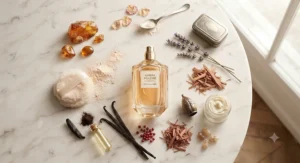
If Shalimar is Guerlain’s famous amber, Guerlain L’Heure Bleue (1912) is its quieter, more introverted sibling — and for perfume purists who find even Shalimar too loud, this is often the deeper cut worth seeking out. The pyramid opens with bergamot and anise, moves through carnation, orange blossom, rose, and tuberose, and finishes in a base of heliotrope, iris, vanilla, and musk that produces one of the most textbook “powdery” drydowns in classic perfumery. Long-time wearers describe it as growing on you gradually rather than making an immediate impression, with several reviewers noting a resemblance to the iris-and-aldehyde character of Chanel No. 5 while feeling distinctly warmer and less sharp. On mature skin, this slow-reveal quality tends to work in the wearer’s favour: rather than a loud opening statement, L’Heure Bleue builds toward its powdery vanilla-iris base over the first half hour, which suits skin and lifestyles that favour subtlety over spectacle. The trade-off is availability and price — this is the most niche-adjacent, hardest-to-find bottle in the lineup, and it commands accordingly premium pricing.
Pros:
- ✅ Textbook powdery iris-vanilla drydown prized by purists
- ✅ Slow, gradual development suited to understated daily wear
- ✅ Distinctive character that avoids “generic designer” territory
Cons:
- ❌ Premium pricing near the top of this entire roundup
- ❌ Limited stock and size options compared to mainstream picks
Budget C$180–C$230 CAD for Guerlain L’Heure Bleue, and treat it as a considered purchase for someone who has already explored — and outgrown — more mainstream amber options.
7. Prada Candy L’Eau — a softer, modern gateway into amber territory
Launched in 2013 as a lighter reinterpretation of the original Prada Candy, Prada Candy L’Eau swaps out the dense, vintage-style powder for a brighter citrus-and-sweet-pea opening over a caramel, benzoin, and white musk base. It’s technically a gourmand-amber rather than a classic powdery amber, and that distinction matters: this is the pick for mature wearers who like the warmth and sweetness of amber but find the traditional iris-heavy powder note reminiscent of an older era they’d rather not evoke. Here’s what to weigh — the benzoin base still delivers genuine amber warmth, just filtered through a modern, translucent lens rather than a dense vintage one. Reviewers describe the scent as light, wearable, and non-overpowering, making it a sensible everyday option for offices or scent-sensitive environments where Opium or Shalimar would be too much. On paper, this means Candy L’Eau functions less as a “grand statement” fragrance and more as a soft daily-wear amber, appealing especially to buyers transitioning away from fruity-floral perfumes without wanting to jump straight into heavyweight vintage territory.
Pros:
- ✅ Modern, translucent take on amber suited to daily office wear
- ✅ Gentle enough for scent-sensitive workplaces and small spaces
- ✅ Approachable bridge fragrance for amber newcomers
Cons:
- ❌ Less “classic powdery” character than the other six picks
- ❌ Shorter longevity typical of eau de toilette concentrations
Prada Candy L’Eau typically retails in the C$90–C$130 range, positioning it as a reasonable mid-tier pick for anyone easing into the amber category rather than diving straight into a dense vintage classic.
Moisturizing Before Fragrance Application: Your Pre-Spray Ritual
Here’s a detail most perfume counters never mention: fragrance clings to hydrated skin dramatically better than it does to dry skin, and mature skin loses moisture faster than it did twenty years ago, which means the moisturizing-before-fragrance step matters more with each passing decade. Unscented lotion or body oil applied to pulse points — wrists, inner elbows, the base of the throat, behind the ears — creates a slightly tacky surface that traps and slow-releases fragrance molecules over several hours, rather than letting them evaporate off dry, flaky skin within the first thirty minutes. The Eczema Society of Canada notes that dry, aging skin benefits from richer, barrier-supportive moisturizers, and that same barrier-repair logic doubles as a longevity hack for fragrance: a well-hydrated skin barrier holds onto scent molecules the way a damp sponge holds onto water, while parched skin lets them simply evaporate. A practical routine looks like this: shower, pat skin damp rather than fully dry, apply an unscented or minimally scented body lotion to pulse points while skin is still slightly damp, wait roughly sixty seconds for it to absorb, then spray perfume directly over the same points. Avoid rubbing the wrists together after spraying — that friction breaks down the top notes and can actually shorten wear time, a common mistake covered in more detail below. For genuinely dry or mature skin, layering a matching or unscented body crème beneath the fragrance — a trick Estée Lauder built directly into the Youth-Dew line decades ago — can extend wear time by two to three hours compared to spraying onto bare skin.
✨ Ready to build your amber signature scent? Take a look at today’s picks and check current pricing before they’re gone. ✨
Elegant Mature-Skin Perfume Recommendations by Occasion
Matching the right amber to the right moment does more for how “put together” a scent feels than the price tag ever will. Consider three realistic scenarios. First: a retired teacher in her early sixties who wants one dependable everyday scent for coffee dates, book club, and errands — for her, Coty L’Aimant or Prada Candy L’Eau make the most sense, since both offer a lighter powdery-amber character that won’t overwhelm indoor spaces or trigger complaints from fragrance-sensitive company. Second: a woman in her fifties still working full-time in a client-facing role who wants a polished signature scent for the office through client dinners — Estée Lauder Youth-Dew or a light hand with Chanel Coco strike the right balance between recognizable elegance and workplace appropriateness, provided application stays to one or two pulse points rather than a full-body spray. Third: a special-occasion wearer — galas, weddings, milestone anniversaries — who wants maximum impact for a handful of nights each year rather than daily rotation; Guerlain Shalimar, Guerlain L’Heure Bleue, or Yves Saint Laurent Opium deliver the kind of dense, memorable amber that’s genuinely built for evening wear rather than a 9-to-5 grind. None of these categories are rigid — the point is matching intensity and budget to actual lifestyle, rather than buying the “best reviewed” bottle and hoping it fits your life around it.
Problem → Solution: Common Powdery Amber Perfume Struggles
A handful of recurring frustrations come up again and again among amber-perfume wearers, and most have straightforward fixes. Problem one: the fragrance seems to disappear within two hours. Solution: this is almost always an application-surface issue rather than a fragrance-quality issue — switch to spraying on moisturized pulse points rather than clothing, and consider layering with an unscented lotion as described above. Problem two: the amber base smells noticeably different by evening than it did that morning. Solution: this is completely normal — amber accords are built to evolve, with citrus and spice top notes fading within the first hour while the vanilla-resin base takes over; if you only like the opening, you may prefer a lighter pick like Prada Candy L’Eau. Problem three: a fragrance that smelled beautiful on a friend or on a tester strip smells different — sometimes unrecognizably so — on your own skin. Solution: individual skin pH, body temperature, and even diet genuinely alter how amber notes read, which is precisely why testing on skin (not paper) for several hours before committing to a full bottle matters, a point we expand on below. Problem four: the fragrance triggers headaches or feels “too much” in enclosed spaces like elevators or offices. Solution: apply fewer sprays to fewer points (one or two pulse points rather than four or five), and lean toward the lighter options in this roundup — Coty L’Aimant or Prada Candy L’Eau — rather than projection-heavy picks like Opium.
How to Choose a Powdery Amber Perfume for Mature Skin
Choosing well in this category comes down to a handful of concrete decision points rather than guesswork.
- Test on skin, not paper, for at least four hours. Amber notes shift dramatically as they interact with individual body chemistry, so a paper strip test tells you almost nothing useful about final drydown.
- Prioritize eau de parfum or parfum concentration over eau de toilette if longevity matters more than a light, sheer effect — higher concentrations hold onto amber’s base notes noticeably longer.
- Match intensity to lifestyle before matching to reputation. A famous, beloved fragrance like Opium is a poor fit for a scent-sensitive open-plan office, regardless of how highly it’s rated.
- Consider the season. Dense amber orientals like Shalimar and Coco tend to perform best in cooler months; lighter options like Prada Candy L’Eau hold up better in summer heat and humidity.
- Factor in your skin’s current hydration level. Drier, more mature skin will need a richer concentration and a moisturizing pre-application routine (see above) to get comparable wear time to well-hydrated skin.
- Budget for a full bottle only after sampling. Decant or sample sizes exist for nearly every fragrance on this list and cost a fraction of a full bottle — a smarter first purchase than committing blind.
- Read aggregated review sentiment, not just star ratings. A 4.3-star average tells you little; look for recurring specific comments about longevity, projection, and how the fragrance reads on mature or dry skin specifically.
Classic Perfumery Styles Explained: Where Powdery Amber Fits
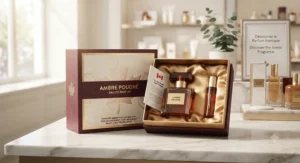
Understanding classic perfumery styles makes the entire amber category far less confusing. Perfumers broadly group fragrances into families: florals, chypres, fougères, gourmands, and orientals (sometimes now called “ambers” as a family name in its own right). Powdery amber sits within the oriental family, characterized by warm resins — labdanum, benzoin, styrax — combined with vanilla, incense, and often iris or heliotrope, the two ingredients most responsible for that classic “face powder” texture. According to Wikipedia’s entry on ambergris, the animal-derived source material that historically inspired amber fragrances has been largely replaced by synthetic ambroxide, which is why modern “amber” perfumes smell related but distinct from truly vintage formulas built before the 1980s reformulation wave. Within the oriental-amber family, there’s meaningful variation: spicy ambers (Opium, Youth-Dew) lean on clove and cinnamon; floral ambers (Coco, Shalimar) soften the resin with rose or jasmine; and powdery ambers specifically (L’Heure Bleue, L’Aimant) foreground iris and heliotrope for that unmistakable cosmetic-powder finish. Recognizing which sub-style you’re drawn to — spicy, floral, or purely powdery — makes shopping far more efficient than browsing by brand name alone, since the same house often makes fragrances across several of these sub-families.
Skin Chemistry and Fragrance Longevity
Skin chemistry and fragrance longevity are more tightly linked than most shoppers realize, and the relationship changes with age in ways worth understanding before you buy. Skin’s natural pH, oil production, and hydration level all interact with fragrance molecules to determine how long a scent lasts and how it evolves throughout the day. As skin matures, sebum (natural oil) production tends to decrease, and skin becomes drier overall — a shift that actually works against fragrance longevity, since oilier skin has historically been associated with holding scent longer, while very dry skin lets top and even heart notes evaporate faster. This is precisely why the moisturizing step covered earlier isn’t just a nice-to-have; it’s a direct, practical countermeasure to an aging-related change in how your skin interacts with fragrance. Body temperature plays a role too — warmer skin diffuses fragrance molecules into the air more readily, which is part of why the same amber perfume can smell noticeably different (and often stronger) in summer heat versus a cold Canadian winter. Diet, medication, and stress levels can subtly shift skin’s natural scent as well, which is the honest explanation behind the common experience of a fragrance smelling different on you than it did on a friend, or different on you this year than it did five years ago. None of this is marketing spin — it’s basic dermatological chemistry, and it’s the reason genuine on-skin testing beats any tester strip or online review, however detailed.
Long-Lasting Amber Scent for Dry Skin: Why Dryness Changes Everything
Finding a long-lasting amber scent for dry skin requires a slightly different strategy than shopping for oilier or combination skin types. Dry skin lacks the natural oils that typically help “grip” fragrance molecules and slow their evaporation, which means even a well-constructed amber can feel like it fades faster on parched skin than the bottle’s reputation suggests. The most reliable fix, as covered above, is applying fragrance to freshly moisturized, slightly damp skin rather than bare dry skin — but concentration choice matters just as much. Eau de parfum and parfum concentrations contain a higher percentage of fragrance oil relative to alcohol than eau de toilette, meaning there’s simply more raw material available to interact with the skin’s surface, which translates directly into longer wear on drier skin types. Among the seven picks above, Guerlain Shalimar, Chanel Coco, and Guerlain L’Heure Bleue — all true eau de parfum concentrations with dense, resin-heavy bases — are the strongest performers specifically for dry, mature skin, while Prada Candy L’Eau, as an eau de toilette, will naturally require more frequent reapplication on the same skin type. A practical trick worth trying: apply fragrance to hair (which holds scent differently than skin) or to a lightly moisturized scarf or clothing edge as a supplement to skin application — fabric and hair don’t suffer the same evaporation issues as dry skin and can meaningfully extend how long a scent remains detectable throughout the day.
Classic Powdery Fragrance for Older Skin vs. Modern Trend Scents
The gap between a classic powdery fragrance for older skin and the trend-driven scents dominating shelves right now is wider than it might first appear. Modern mass-market perfumes released in the last five to ten years lean heavily toward sweet, gourmand, or “clean” musk profiles — think vanilla-caramel blends, fruity florals, or sheer skin-scent musks marketed as effortless and universally flattering. Classic powdery ambers, by contrast, were built in an era when perfumers prioritized complexity, longevity, and a distinct, recognizable signature over broad, inoffensive appeal. The practical difference on skin is significant: trend scents tend to smell nearly identical from first spray to last, fading evenly and predictably, while classic ambers like Shalimar or L’Heure Bleue are designed to evolve dramatically over several hours, rewarding patience with a completely different (and usually richer) character by evening. For mature wearers specifically, classic powdery ambers often flatter in a way trend scents don’t, because the iris-and-vanilla powder note pairs naturally with the drier, more mature skin texture rather than fighting against it the way a sharp, syrupy-sweet gourmand can. That said, this isn’t an argument that older is universally better — Prada Candy L’Eau proves a modern house can still deliver genuine amber warmth in a lighter, more contemporary register. The real takeaway is that “classic” and “trend” aren’t a hierarchy so much as two different tools, and knowing which one suits a given occasion, season, and skin type is more useful than assuming one category is objectively superior.
Common Mistakes When Buying Amber Perfume for Mature Skin
A handful of avoidable errors account for most disappointing perfume purchases in this category. The first and most common is buying based on a paper tester strip alone rather than wearing the fragrance on skin for several hours — amber accords in particular can smell noticeably different once they interact with individual body chemistry, so a strip test is, at best, a rough starting filter. The second mistake is over-applying, especially with intensely projecting fragrances like Opium; more sprays doesn’t equal more elegance, and it often has the opposite effect in enclosed spaces. Third, many shoppers assume eau de toilette and eau de parfum versions of the same fragrance name will perform identically — they won’t, and the concentration difference genuinely matters for longevity on drier, more mature skin specifically. Fourth is neglecting the moisturizing step covered earlier in this guide; applying fragrance to bare, dry skin is one of the single biggest (and most easily fixed) reasons a perfume seems to underperform its reputation. Finally, many buyers assume price directly correlates with how well a fragrance will suit them personally, when in reality Coty L’Aimant at a fraction of the cost of Chanel Coco may objectively suit a given wearer’s skin and lifestyle better — the goal is fit, not spend.
Safety, Regulations & Ingredient Transparency in Canada
Buying fragrance in Canada comes with a specific regulatory backdrop worth understanding, particularly for anyone with sensitive or reactive skin. Health Canada’s Cosmetic Regulations permit the term “parfum” to appear at the end of an ingredient list to indicate a proprietary fragrance blend, since disclosing every individual component of a fragrance mixture would make labels impractically long — a standard shared globally, not unique to Canada, as outlined on Canada.ca’s cosmetic labelling guidance. However, Canada has been tightening allergen-specific disclosure: as of 2026, cosmetic products sold here must individually declare designated fragrance allergens on labels when they exceed set concentration thresholds, a rule aligned with international standards and intended to help fragrance-sensitive or allergy-prone consumers make more informed choices. For mature skin specifically — which tends to be more reactive to potential irritants than it was decades earlier — checking for allergen disclosures on newer bottles, and patch-testing any new fragrance on the inner arm before full application, is a genuinely useful habit rather than excessive caution. It’s also worth noting the ongoing, decades-long public conversation in Canada about scent-free policies in shared workplaces and public spaces; a 2015 CBC News feature on Canada’s approach to public perfume policy highlighted just how unresolved this debate remains, which is a practical reminder that even a beloved, high-quality amber fragrance is worth applying with restraint in shared or enclosed environments.
Long-Term Cost & Value: Building a Signature Scent Wardrobe
Thinking about amber perfume as a long-term wardrobe rather than a single purchase changes the math considerably. A single C$150 bottle of eau de parfum, worn at two to three sprays per outing and lasting six to eight hours, typically delivers well over a hundred individual wears before the bottle runs dry — working out to roughly C$1.50 or less per wear, a genuinely reasonable figure once you account for how long a quality fragrance actually lasts in the bottle itself (often two to three years of regular use). Building a small rotation — say, Coty L’Aimant for everyday errands, Estée Lauder Youth-Dew for the office, and Chanel Coco or Guerlain Shalimar reserved for evenings — spreads that cost even further while giving genuine variety across occasions, rather than sinking the entire fragrance budget into one bottle that may not suit every context. Storage matters for long-term value too: keeping bottles away from direct sunlight, heat, and humidity (bathroom cabinets are actually a poor storage choice for this reason) preserves the composition and prevents the top notes from degrading prematurely, protecting the investment you’ve already made. Compared to trend-driven fragrances that may feel dated within a couple of years as scent trends shift, classic powdery ambers have a genuine advantage: their multi-decade track record suggests they’re far less likely to feel “wrong” for the moment five or ten years down the line, which is a real, if underappreciated, form of long-term value.
Frequently Asked Questions
❓ What is the best powdery amber perfume for mature skin on a budget?
❓ Does powdery amber perfume smell different on mature or dry skin?
❓ How long does a bottle of amber eau de parfum typically last?
❓ Is Guerlain Shalimar too strong for daily office wear?
❓ Should I apply amber perfume before or after moisturizer?
Conclusion
Powdery amber perfume for mature skin isn’t a niche curiosity — it’s one of perfumery’s most enduring, well-tested categories, built on formulas that have survived changing trends precisely because they were engineered around genuine complexity rather than fleeting appeal. Whether you land on the nostalgic, budget-friendly warmth of Coty L’Aimant, the seventy-year track record of Estée Lauder Youth-Dew, or the unmistakable presence of Guerlain Shalimar or Yves Saint Laurent Opium, the real work isn’t finding the “best” bottle on paper — it’s matching intensity, concentration, and price to your actual skin, lifestyle, and the season you’re shopping for. Remember that moisturizing before application isn’t a minor styling tip but a genuine longevity strategy, particularly as skin chemistry shifts with age, and that testing on skin (never paper alone) remains the single most reliable way to predict how any of these seven fragrances will actually wear on you. Amber rewards patience — both in how it develops over a single day and in how it settles into a long-term signature over years of wear. Take your time, sample before you commit to a full bottle, and let the fragrance that best suits your own skin chemistry — not the one with the loudest marketing — become the one people quietly associate with you.
✨ Don’t Miss These Exclusive Deals!
🔍 Take your fragrance wardrobe to the next level with these carefully selected amber perfumes. Click on any highlighted item to check current pricing and availability. These classic scents will help you build an authentic, elegant signature that suits your mature skin beautifully!
Recommended for You
- Powdery Amber Perfume for Office Wear: 7 Best Picks (2026)
- Powdery Amber Perfume for Women: 7 Elegant Picks for 2026
- Vanilla Amber Fragrance Gift for Her: 7 Ultimate Picks (2026)
Disclaimer: This article contains affiliate links. As an Amazon Associate, I earn from qualifying purchases. If you purchase products through these links, we may earn a small commission at no additional cost to you.
✨ Found this helpful? Share it with your friends! 💬🤗
