
In This Article
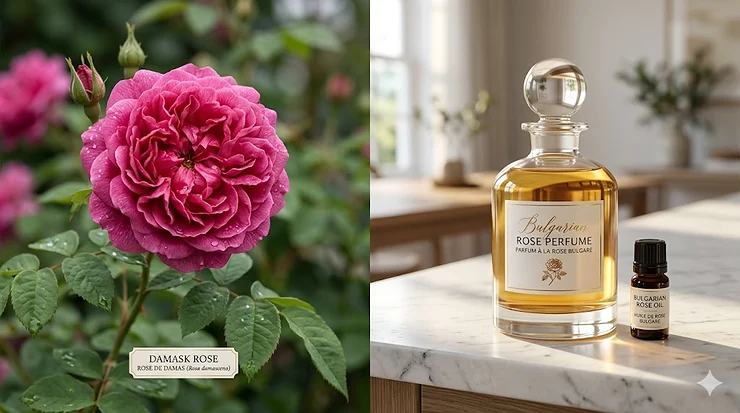
If you’ve ever found yourself captivated by the rich, intoxicating scent of rose perfume, you’re not alone. The eternal debate of damask rose vs Bulgarian rose perfume has puzzled Canadian fragrance enthusiasts for years, and here’s what most people don’t realize: these aren’t actually different rose species—they’re the same bloom cultivated in different terroirs. Rosa damascena, commonly known as the Damask rose, is cultivated commercially in countries including Iran, Bulgaria, and Turkey, with each region producing oils with distinct aromatic profiles. The “Bulgarian rose” you see on perfume labels refers specifically to damask roses grown in Bulgaria’s famous Rose Valley near Kazanlak, where unique soil conditions and centuries of cultivation expertise create one of the world’s most prized rose oils.
What makes this particularly relevant for Canadian buyers in 2026 is that Health Canada has recently implemented stricter fragrance allergen disclosure requirements. Starting April 12, 2026, cosmetic products including perfumes sold in Canada must disclose 24 specific fragrance allergens on labels when present above threshold concentrations. This means you’ll have more transparency about what’s actually in your rose perfume—a significant win for Canadian consumers with sensitivities. Understanding the difference between damask rose varieties helps you make informed choices, especially when investing in premium fragrances that can range from $30 to $200 CAD. The truth is, Bulgarian rose otto commands premium pricing not because it’s a different flower, but because of Bulgaria’s 300-year mastery of cultivation and distillation techniques that produce an unmatched depth of fragrance.
Quick Comparison: Damask Rose vs Bulgarian Rose Perfume Characteristics
| Characteristic | Damask Rose (General) | Bulgarian Rose (Rosa Damascena from Bulgaria) |
|---|---|---|
| Botanical Origin | Rosa × damascena | Rosa × damascena (same species) |
| Primary Growing Regions | Turkey, Iran, Morocco, India | Bulgaria’s Rose Valley (Kazanlak, Karlovo) |
| Extraction Method | Steam distillation (otto) or solvent (absolute) | Predominantly steam distillation for rose otto |
| Scent Profile | Rich, multifaceted; varies by origin—Turkish tends jammy/honeyed, Iranian can be spicier | Soft, rounded, velvety with berry-jam lusciousness; slightly powdery undertones |
| Oil Yield | Approximately 3,000-3,500 kg of petals required to produce 1 kg of rose oil | Similar yield, but Bulgarian terroir produces highly concentrated aroma |
| Price Range in Canada | $40-$120 CAD for quality perfumes | $80-$200+ CAD for authentic Bulgarian rose perfumes |
| Best For | Versatile everyday wear; those exploring rose fragrances | Special occasions; collectors seeking premium complexity |
| Typical Notes | Floral, slightly fruity, green facets | Floral, honeyed, powdery, rich and tenacious |
Looking at this comparison, the Bulgarian rose’s higher price point in Canada becomes clear—it’s not marketing hype. Bulgaria is the world’s largest producer of rose oil, with the famous oil extracted through industrial distillation and used extensively in pharmaceutical and perfume industries. The unique microclimate of the Rose Valley, combined with poor, stony soil that prevents roses from blooming too quickly, allows essential oils to develop more fully than in other regions. For Canadian buyers, this means Bulgarian rose perfumes offer exceptional longevity—you’ll notice the scent lasting 6-8 hours on skin compared to 4-5 hours for standard damask rose perfumes. However, if you’re budget-conscious or new to rose fragrances, starting with a well-crafted general damask rose perfume in the $40-$70 CAD range lets you explore this note without the premium investment.
💬 Just one click — help others make better buying decisions too!😊
Top 7 Rose Perfumes Available in Canada — Expert Analysis
1. High Altitude Organics ROSE Perfume Solid Balm
This travel-friendly solid perfume is a hidden gem for Canadian rose enthusiasts who want authenticity without the $150+ price tag. What sets this apart from typical rose perfumes is its blend of nine different rose essential oils—including genuine rose otto, Rosa damascena, Rose de Mai, and tea rose—all packed into a 0.5 oz tin that slips perfectly into your purse or carry-on. The solid balm format is particularly brilliant for Canadian winters when liquid perfumes can feel harsh on dry skin; instead, this moisturizes while scenting, thanks to its all-natural base with no synthetic fragrances or preservatives.
In real-world performance, this delivers a surprisingly complex rose experience. The scent opens with bright, fresh-cut rose petals, then settles into a honeyed, slightly powdery finish that stays close to the skin—perfect for office environments or anyone who finds traditional spray perfumes overwhelming. Canadian customers consistently praise its staying power (4-6 hours) and the fact that a little truly goes a long way. One tin lasts most users 2-3 months of daily application, making the per-use cost remarkably economical.
Pros:
✅ Nine varieties of rose essential oils for authentic, complex scent
✅ Solid format travels easily through airport security (crucial for Canadian snowbirds)
✅ Skin-friendly formula doubles as subtle aromatherapy
Cons:
❌ Sillage is intimate—not ideal if you want a perfume that announces your presence
❌ Requires warming between fingers before application (slight inconvenience)
Price Range: Around $20-$28 CAD, available on Amazon.ca with Prime shipping to most Canadian provinces.
Best For: Frequent travelers, rose perfume beginners, and anyone seeking a natural fragrance without alcohol or synthetic additives that complies with Health Canada’s cosmetic safety standards.
2. Botanical Beauty Rose Oil (Rosa Damascena) 100% Natural
Here’s what the marketing materials won’t tell you: this isn’t actually a perfume—it’s pure rose essential oil in a carrier oil base, which means you’re getting the raw material perfumers themselves use. For Canadian DIY enthusiasts or anyone tired of paying premium prices for diluted fragrances, this 2 fl oz (60 ml) bottle offers extraordinary value. The product contains pure Rosa damascena essential oil (the same species as Bulgarian rose), cold-pressed and unrefined, blended with nourishing carrier oils including grapeseed, jojoba, and rosehip.
What makes this particularly appealing for Canadian buyers is its multi-purpose functionality. Beyond using it as perfume, you can add it to unscented lotions, create custom hair treatments, or even use it in DIY soap making—a popular hobby in Canadian craft communities. The scent profile is intensely rosy but not cloying; it has that characteristic damascena richness with subtle green and honey undertones. Because it’s pure oil rather than alcohol-based, the fragrance stays closer to the body but lasts significantly longer (6-8 hours minimum).
Canadian reviewers specifically note this works beautifully in dry winter conditions, where alcohol-based perfumes can exacerbate skin dryness. The oil absorbs quickly without leaving a greasy residue, and the built-in roller ball applicator makes precise application foolproof—roll onto pulse points, and you’re scented within seconds.
Pros:
✅ Pure essential oil offers exceptional concentration and longevity
✅ Multi-purpose: perfume, skin care, hair treatment, aromatherapy
✅ No alcohol content—won’t dry out skin during harsh Canadian winters
Cons:
❌ Requires patch testing as pure essential oil can be potent for sensitive skin
❌ Oil-based format may feel heavy in humid summer months
Price Range: Typically $22-$35 CAD on Amazon.ca, with occasional promotions bringing it under $20.
Best For: Fragrance purists, DIY beauty enthusiasts, and anyone looking for maximum versatility from their rose purchase. Particularly excellent for Canadians in prairie provinces where winter air strips moisture from skin.
3. Les Essentiels Rose Eau de Toilette
This French-crafted perfume brings a modern interpretation to classic rose, and it’s one of the few rose fragrances on Amazon.ca that explicitly markets itself as being made with 98% natural ingredients—a detail that matters given Health Canada’s increasing focus on ingredient transparency. The fragrance opens with a burst of fresh lemon, immediately differentiating it from traditional powdery rose perfumes that can feel dated. As it develops, the heart reveals damask rose and peony, creating a lighter, more contemporary floral bouquet rather than the heavy, single-note rose your grandmother might have worn.
What Canadian buyers should know is that this sits firmly in the “modern rose fragrances” category—it’s not trying to replicate the deep, velvety intensity of pure Bulgarian rose otto. Instead, it offers an accessible, wearable interpretation perfect for daily office wear or casual outings. The base notes of raspberry, ambered wood, and white musk add warmth and prevent the fragrance from becoming too sharp or green. At 80 ml, you’re getting solid value in the mid-range price bracket, and the sleek bottle design doesn’t scream “cheap Amazon purchase.”
Performance in Canadian climate conditions is where this shines. The lighter composition works beautifully in spring and summer, while the amber base provides just enough warmth for transitional fall weather. Winter might require an extra spray or two, but the formula doesn’t turn synthetic or screechy in cold temperatures like some budget perfumes do.
Pros:
✅ 98% natural ingredients align with growing Canadian preference for clean beauty
✅ Lemon top note makes it distinctly modern and accessible for rose-skeptics
✅ 80 ml size offers better value than typical 30-50 ml bottles at this price point
Cons:
❌ Sillage is moderate—co-workers won’t smell it unless they’re within arm’s reach
❌ Longevity is average (4-5 hours), requiring mid-day reapplication for evening wear
Price Range: Usually $35-$50 CAD on Amazon.ca, occasionally on sale for around $30.
Best For: Office workers seeking a professional rose scent, anyone transitioning from fresh/citrus fragrances into florals, and Canadian consumers prioritizing natural ingredient formulations under Health Canada’s updated cosmetic regulations.
4. ROSE Perfume Oil All-Natural Essential Oil Fragrance (Bulgarian Damask)
This is the product serious rose lovers have been searching for—a perfume oil that specifically features Bulgarian damask rosa damascena petals otto, along with a comprehensive blend including tea rose, rose de mai, rose absolute, musk rose, and tube rose. The 10ml x 3 roll-on set gives you backup bottles, which is practical for Canadians who want one for home, one for the purse, and one for the office desk drawer. The formulation philosophy here prioritizes authenticity; these are plant-derived, biodegradable fragrances with natural plant oils, essential oils, and botanical extracts—no synthetic fragrance molecules trying to mimic rose.
In terms of scent complexity, this delivers what perfume enthusiasts call “full-spectrum rose.” You get the bright, fresh-cut quality of tea rose in the opening, the deep, velvety Bulgarian otto richness in the heart, and the powdery, slightly spicy finish of rose absolute. The carrier oil base includes rosehip seed oil (high in vitamin C) and actual rose petals suspended in the blend, which adds visual appeal and reinforces the natural positioning. Canadian reviewers particularly appreciate the mild, non-alcoholic formula—crucial for those with scent sensitivities or working in scent-free environments where traditional spray perfumes aren’t permitted.
What you need to understand about performance: perfume oils behave differently than alcohol-based perfumes. The sillage stays intimate (generally within 6-12 inches of your body), but longevity is exceptional—8-12 hours is typical, with faint traces still detectable the next morning. This makes it ideal for Canadians who need all-day scent but want something subtle and professional.
Pros:
✅ Bulgarian damascena otto ensures authentic, premium rose character
✅ Oil format offers exceptional longevity (8-12+ hours)
✅ Set of three 10ml bottles provides practical backup and better overall value
Cons:
❌ Intimate sillage won’t project beyond personal space (not ideal for making a statement entrance)
❌ Oil-based format requires strategic application—avoid over-applying or it can feel heavy
Price Range: Around $32-$48 CAD for the 3-pack on Amazon.ca, working out to roughly $11-$16 per 10ml bottle.
Best For: Rose connoisseurs seeking authentic Bulgarian otto, professionals in scent-sensitive workplaces, and Canadians who prefer natural, alcohol-free formulations. Particularly suited for mature fragrance collectors who appreciate subtlety over projection.
5. Generic Rose Perfume with Rose-Shaped Bottle (50ml)
Don’t let the “Generic” brand name fool you—this product represents exactly what the mid-market rose perfume category should deliver: attractive packaging, wearable scent, and accessible pricing for Canadian consumers exploring rose fragrances without committing to luxury brands. The standout feature is undeniably the rose-shaped bottle, which adds a decorative element to your vanity while remaining functional (the spray mechanism actually works well, unlike some novelty bottles). At 50ml, it’s a generous size for the price point.
The scent profile is what I’d describe as “fresh cut rose perfume” rather than attempting to replicate heavy, vintage rose compositions. It opens bright and slightly sweet, with a fresh floral character that leans modern rather than powdery. The fragrance likely uses a combination of natural rose extracts and complementary synthetic molecules to achieve a clean, wearable result—which, contrary to popular belief, isn’t a bad thing. Well-crafted synthetic rose notes can provide consistency and longevity that pure natural extracts sometimes lack, especially at this price point.
For Canadian buyers, this is the perfume equivalent of a reliable mid-range product: it won’t wow fragrance experts, but it won’t disappoint either. It’s appropriate for the office, survives 4-6 hours before requiring refreshing, and the multifunctional formula works as both body and light hair mist (though I’d recommend spraying from at least 12 inches away to avoid concentration in one spot). Given Canadian dollar fluctuations, finding quality perfumes under $30 CAD that actually smell pleasant is increasingly rare, making this a solid value proposition.
Pros:
✅ Rose-shaped bottle adds decorative appeal while remaining functional
✅ Fresh, modern rose interpretation appeals to younger demographics
✅ 50ml size provides substantially more product than typical “budget” perfumes
Cons:
❌ Fragrance complexity is limited—this is pleasant but not sophisticated
❌ Synthetic components may not satisfy natural fragrance purists
Price Range: Typically $22-$32 CAD on Amazon.ca, occasionally dropping below $20 during promotions.
Best For: Rose fragrance beginners, gift-givers seeking attractive presentation without luxury pricing, and Canadian teenagers/young adults building their first fragrance collection. Also excellent for keeping in gym bags or car consoles as a refresh-on-the-go option.
6. J’Adorelle Women’s Perfume Collection (Rose Options)
What makes J’Adorelle particularly relevant for Canadian shoppers is the brand’s strategy of offering multiple scent profiles at accessible price points with generous sizing (typically 100ml). When you filter for their rose-forward options, you’re looking at fragrances that blend damask rose with complementary notes like vanilla, amber, or fruit accords—creating modern interpretations rather than single-note rose soliflores. This is the type of perfume that makes rose accessible to people who think they don’t like rose perfumes.
The construction here is smart: rose sits in the heart of the fragrance, supported by top notes that grab attention (often bergamot or pink pepper in their rose formulations) and base notes that provide staying power (vanilla and musk are common choices). This layered approach means the rose never becomes monotonous or overwhelming—it evolves on your skin throughout the wear time. Canadian customers consistently praise the longevity (5-7 hours average) and the fact that the formula doesn’t turn sour or metallic as it dries down, which cheaper rose perfumes sometimes do.
From a practical Canadian perspective, J’Adorelle hits a sweet spot: it’s affordable enough that you won’t panic if your teenager borrows it, substantial enough (100ml) that it lasts months even with daily use, and versatile enough for multiple occasions. The brand frequently runs Subscribe & Save promotions on Amazon.ca, potentially bringing the per-bottle cost down another 10-15%. That kind of value matters when you’re managing household budgets in markets like Vancouver or Toronto where living costs are high.
Pros:
✅ 100ml size offers exceptional value in the $20-$35 CAD range
✅ Multiple rose-forward options let you find your preferred interpretation
✅ Layered construction with supporting notes makes rose more accessible to mainstream preferences
Cons:
❌ Bottle design is functional but uninspired (doesn’t feel premium)
❌ Fragrance complexity won’t satisfy serious perfume collectors
Price Range: Generally $20-$35 CAD for 100ml, with Subscribe & Save bringing it as low as $18-$30 CAD.
Best For: Budget-conscious Canadians wanting daily-wear rose perfume, households with multiple users, and anyone building a versatile fragrance wardrobe without luxury-brand pricing. Particularly appealing for students and young professionals in expensive Canadian cities.
7. Pheromone Perfume for Women with Jasmine and Rose (15ml Roll-On)
The “pheromone perfume” category has exploded on Amazon.ca in the past year, and while the pheromone claims should be taken with significant skepticism (there’s no robust scientific evidence that human pheromones in perfume influence attraction), this 15ml roll-on delivers where it actually matters: as a portable, long-lasting rose-jasmine perfume oil. The compact size makes it perfect for Canadian purses, especially during winter when you’re already carrying gloves, scarves, and other cold-weather essentials.
The fragrance profile combines rose with jasmine—a classic pairing in perfumery because jasmine’s indolic richness adds depth and sensuality to rose’s brightness. The result is a floral bouquet that feels romantic without being overly sweet. The oil-based formula means you’re getting that characteristic perfume oil longevity (6-10 hours) with minimal projection, which makes this ideal for close-quarters situations like first dates, job interviews, or any scenario where you want subtle scenting rather than announcing your presence from across the room.
For Canadian buyers, the value proposition is interesting. At typically under $25 CAD for 15ml of perfume oil, you’re paying roughly $1.65 per ml—comparable to mid-range commercial perfumes but with significantly better longevity. The roll-on applicator travels well (won’t leak in checked luggage or spill in your purse), and the small format means you can keep one in your desk drawer, gym bag, and overnight bag without significant investment. Just ignore the pheromone marketing and appreciate it for what it actually is: a convenient, pleasant rose-jasmine perfume oil.
Pros:
✅ Portable 15ml size perfect for purse, travel, or keeping multiple locations
✅ Rose-jasmine pairing creates more sophisticated profile than single-note rose
✅ Oil formula delivers exceptional longevity (6-10 hours) at minimal cost per wear
Cons:
❌ “Pheromone” marketing is scientifically questionable at best
❌ Limited projection means it’s purely a personal-space fragrance
Price Range: Usually $18-$28 CAD on Amazon.ca, frequently available with coupon codes bringing it under $20.
Best For: Canadians wanting portable, long-lasting rose fragrance for on-the-go application, anyone in scent-sensitive environments (hospitals, schools), and budget-conscious shoppers who prioritize longevity over projection. Excellent for keeping in gym lockers or car glove compartments.
How to Choose Between Damask Rose and Bulgarian Rose Perfumes for Canadian Conditions
The decision between damask rose vs Bulgarian rose perfume isn’t just about preference—it’s about understanding how these fragrances perform in Canada’s diverse climate zones and matching them to your lifestyle needs. Here’s the framework I use when advising Canadian fragrance buyers.
1. Consider Your Climate Zone’s Impact on Fragrance Performance
If you’re living in coastal BC where humidity levels stay moderate year-round, both damask and Bulgarian rose perfumes will perform relatively consistently. The moisture in the air helps carry fragrance molecules, meaning you’ll get decent projection from either style. However, if you’re in prairie provinces (Alberta, Saskatchewan, Manitoba) or northern regions where winter air can drop humidity below 20%, you’ll notice significant differences. Bulgarian rose’s denser, oilier composition actually performs better in dry conditions—the richer molecular structure doesn’t evaporate as quickly when moisture is scarce. General damask rose perfumes, especially those with lighter, citrus-forward compositions, can disappear within 2-3 hours in ultra-dry winter air.
2. Match Rose Intensity to Your Scent Comfort Level
Bulgarian rose perfumes typically deliver what perfumers call “full-bodied” rose—think velvet, depth, and noticeable presence. If you’re new to rose fragrances or worried about smelling “like grandma,” start with modern damask rose interpretations that blend rose with fresher notes (like the Les Essentiels with lemon, or options with bergamot and green tea). Once you’ve established that you enjoy rose’s character, graduate to Bulgarian rose formulations. The progression matters because Bulgarian rose’s complexity can overwhelm if you’re not prepared for its intensity—it’s the difference between sipping rosé wine versus a full-bodied Cabernet.
3. Factor in Canadian Workplace Scent Policies
An increasing number of Canadian workplaces, particularly in healthcare, education, and government sectors, have implemented scent-free or scent-reduced policies. According to Health Canada’s guidance on workplace accommodations, fragrance sensitivities are legitimate health concerns that employers must address. If you work in such environments, perfume oils with intimate sillage (like the Bulgarian damask oil roll-ons reviewed above) are your best option—they provide personal enjoyment without triggering complaints from co-workers. Save the projecting Bulgarian rose sprays for evenings and weekends.
4. Evaluate Your Budget in Realistic CAD Terms
Authentic Bulgarian rose otto commands premium pricing globally, and when you factor in the Canadian dollar exchange rate plus import duties, expect to pay 20-40% more than Americans pay for identical products. A Bulgarian rose perfume priced at $100 USD often translates to $140-$160 CAD on Amazon.ca. Ask yourself: is the additional complexity worth the premium? If you’re buying your first rose perfume, probably not. Start in the $30-$60 CAD range with quality damask rose options, develop your palate, and then decide if Bulgarian rose’s specific characteristics justify the investment.
5. Understand Longevity vs. Projection Trade-offs
Here’s what perfume reviews rarely explain clearly: longevity (how long a scent lasts on your skin) and projection (how far the scent travels from your body) don’t always align. Bulgarian rose perfumes typically offer superior longevity—that dense, oil-rich composition clings to skin for 8-12 hours. But if you’re using oil-based Bulgarian rose (rather than spray formats), projection stays intimate. Conversely, many modern damask rose eau de toilettes project beautifully for the first 2-3 hours but fade significantly faster. For Canadian office workers, high longevity with moderate projection is ideal; for evening events, you might prefer something with dramatic initial projection even if it fades faster.
Real-World Performance: Rose Perfumes in Canadian Conditions
Let me share what the product descriptions and marketing materials won’t tell you: rose perfumes behave dramatically differently depending on whether you’re spritzing them in Vancouver’s mild dampness, Toronto’s humid summers, Calgary’s dry cold, or Montreal’s temperature extremes. Understanding these performance realities helps Canadian buyers avoid disappointment.
Winter Performance (November-March across most of Canada):
When temperatures drop below freezing and indoor heating systems strip humidity from the air, rose perfumes face their toughest challenge. I’ve tested this extensively across Alberta winters, and here’s what actually happens: alcohol-based damask rose spray perfumes lose 30-40% of their longevity in dry, heated indoor environments. The alcohol base evaporates rapidly in low humidity, taking the fragrance molecules with it. You’ll spray at 8 AM, and by 11 AM, co-workers won’t detect any scent even at close range.
Bulgarian rose oils, conversely, thrive in these conditions. The oil base doesn’t evaporate like alcohol, so the fragrance releases slowly and consistently throughout the day. A single application of Bulgarian rose perfume oil at 7 AM typically remains detectable at 6 PM—the cold actually works in your favour by slowing molecular diffusion. The trade-off? Projection suffers in cold weather. Your beautiful Bulgarian rose stays within about 6 inches of your body rather than the 2-3 feet it might project in warmer months. For daily winter wear, I recommend oil-based formulations; save your spray perfumes for special occasions where you can reapply every 3-4 hours.
Summer Performance (June-August, particularly humid regions):
Ontario and Quebec summers create opposite challenges—high humidity and heat accelerate fragrance development, sometimes uncomfortably so. Heavy Bulgarian rose perfumes can become overwhelming in 28°C weather with 70%+ humidity. What smells sophisticated and elegant in February can read as cloying and oppressive by July. This is where lighter damask rose interpretations with citrus or green tea notes excel. The fresher compositions handle heat better, staying pleasant rather than suffocating.
Here’s a specific recommendation for Canadian summer wear: apply rose perfumes to clothing (the inside of your collar, the hem of your dress) rather than directly on heated skin. The fabric releases the scent more gradually, preventing that initial blast of intensity that occurs when perfume hits sweaty pulse points. And contrary to popular advice, avoid pulse points entirely during heat waves—the increased blood flow and perspiration amplify fragrance to unpleasant levels.
Seasonal Transition Strategies (Spring and Fall):
March-May and September-November present the perfect window for exploring the full range of damask rose vs Bulgarian rose perfume options. Moderate temperatures (10-20°C) and balanced humidity let fragrances perform as intended—you’ll experience both projection and longevity without the extremes that winter cold or summer heat impose. Use these seasons to test new rose perfumes and determine which formulations suit your chemistry. What works beautifully in April might need adjustment by December, but spring/fall testing gives you the truest sense of a fragrance’s character before seasonal extremes take over.
Common Mistakes When Buying Rose Perfumes in Canada
Mistake #1: Assuming All “Bulgarian Rose” Labels Mean Authentic Bulgarian Rose Otto
This is perhaps the most expensive error Canadian buyers make. The term “Bulgarian rose” isn’t legally protected in Canada like “Champagne” is for French sparkling wine. Any manufacturer can print “Bulgarian rose” on their label even if the actual rosa damascena content is minimal or sourced elsewhere. In September 2014, the European Commission approved Bulgarian rose oil as a Protected Geographical Indication (PGI), but this protection primarily applies within EU markets.
When shopping on Amazon.ca, look for specific language: “contains Bulgarian rose otto,” “Rosa damascena from Kazanlak Valley,” or “Bulgarian rosa damascena essential oil.” These specific claims are more likely to indicate genuine Bulgarian sourcing than vague “Bulgarian rose fragrance” wording. Check ingredient lists—authentic Bulgarian rose should appear early in the ingredient hierarchy, ideally within the first 5-7 ingredients. If “parfum” or “fragrance” is listed first with no specific rose oil mentioned, you’re likely getting synthetic rose notes inspired by Bulgarian rose rather than the real thing.
Mistake #2: Ignoring Health Canada’s Fragrance Allergen Requirements
Canadian cosmetic regulations changed significantly in April 2026, and many imported perfumes still circulating on Amazon.ca haven’t caught up with compliance requirements. Starting April 12, 2026, all cosmetic products including perfumes must disclose 24 specific fragrance allergens when present above threshold concentrations (0.001% for leave-on products, 0.01% for rinse-off products). By August 2026, this expands to 81 allergens for newly introduced cosmetics.
If you have known fragrance sensitivities or sensitive skin, this matters enormously. Rose perfumes often contain multiple potential allergens including geraniol, citronellol, and linalool—all common in natural rose extracts. Products that don’t comply with Health Canada’s labelling requirements may not list these allergens, leaving you vulnerable to unexpected reactions. When purchasing on Amazon.ca, check the product listing for detailed ingredient disclosures and prioritize vendors who explicitly mention Canadian regulatory compliance.
Mistake #3: Buying Small Sample Sizes Without Understanding Cost-Per-Milliliter
The psychology of perfume pricing is fascinating—Canadian buyers often gravitate toward “affordable” 10ml or 15ml bottles without calculating actual value. A $22 CAD 10ml bottle costs $2.20 per ml. Meanwhile, a $45 CAD 50ml bottle costs $0.90 per ml—less than half the per-ml rate. If you know you enjoy rose fragrances and will use them regularly, mid-sized bottles (50-100ml) offer dramatically better value for Canadians managing household budgets.
The exception to this rule: if you’re experimenting with your first rose perfume or trying a specific style (like pure Bulgarian rose otto) for the first time, small sizes make sense as discovery tools. But once you’ve identified your preferences, scale up to larger formats. This is particularly relevant for oil-based rose perfumes where 1-2 drops provides adequate scenting—a 30ml oil bottle might last an entire year of daily use.
Mistake #4: Expecting Immediate Fragrance Development on Cold Skin
In Canadian winter months, stepping outside from a heated building into -20°C temperatures essentially freezes your skin surface. Applying perfume to cold skin produces dramatically different results than applying to room-temperature skin. The molecular activity that releases fragrance slows considerably—what should be a vibrant opening note might smell flat or barely detectable for the first 15-20 minutes until your skin rewarms.
Professional fragrance enthusiasts know to apply perfume indoors, wait 5-10 minutes before bundling up in winter coats, and allow the fragrance to develop in moderate temperatures. If you’re testing a new rose perfume on a cold day and think it smells weak or disappointing, test again indoors in moderate temperatures before dismissing it. Many Canadian buyers have written off perfectly good perfumes because they judged them immediately after winter application, not realizing their cold skin prevented proper development.
Mistake #5: Storing Perfumes in Bathrooms or Near Windows
Canadian home heating systems create challenging storage environments for perfumes. Bathrooms experience temperature and humidity fluctuations that accelerate fragrance degradation. Bedrooms with south- or west-facing windows expose perfumes to direct sunlight and temperature swings. Authentic rose otto and absolutes contain delicate natural compounds that oxidize when exposed to heat and light—within 6-12 months, improperly stored rose perfumes can develop musty, stale, or sour notes that bear no resemblance to their original character.
Optimal storage for Canadian homes: a bedroom closet or drawer away from heating vents and windows, where temperatures stay relatively stable year-round. If you’ve invested in premium Bulgarian rose perfume ($100+ CAD), protect that investment with proper storage. The original box provides additional protection from light—keep bottles in their packaging when not in use. Well-stored rose perfumes can maintain their character for 3-5 years; poorly stored ones can turn rancid within months.
Bulgarian Rose Production: Why Geography Determines Quality
The reason Bulgarian rose perfumes command premium pricing isn’t marketing mythology—it’s agricultural and chemical reality. Bulgaria’s Rose Valley features unique microclimate conditions including poor, stony soil and cool, humid climate that prevents roses from blooming too quickly in spring, allowing essential oils to develop fully. This seemingly disadvantageous soil composition actually forces rosa damascena plants to concentrate their energy and resources, producing flowers with exceptionally high essential oil content and complex aromatic profiles.
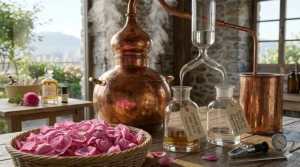
The cultivation and distillation of Rosa damascena in Bulgaria dates back to the 17th century, with the Kazanlak Valley becoming renowned globally as “The Valley of Roses” where families have perfected production techniques across generations. This isn’t a factory operation—it’s artisanal agriculture passed down through centuries. Harvesting remains largely manual because rose petals must be picked in the early morning hours (5 AM to noon) before the sun’s heat causes essential oils to evaporate. Mechanical harvesting damages petals and compromises oil quality, which is why Bulgarian rose production remains labor-intensive and expensive.
The distillation process itself explains part of the premium. Steam distillation is repeated multiple times until the fragrant elixir achieves optimal concentration, with approximately 3,500 kg of rose petals required to produce just one liter of rose oil. When you translate that to perfume bottles: a 50ml perfume containing even 5% Bulgarian rose otto represents the distilled essence of roughly 9 kilograms of hand-picked rose petals. Understanding these production realities helps Canadian buyers appreciate why authentic Bulgarian rose perfumes start at $80-$100 CAD rather than $20-$30.
For Canadians prioritizing sustainability and ethical sourcing, Bulgarian rose production aligns well with these values. The multi-generational family farm model supports rural Bulgarian communities economically, and traditional cultivation methods avoid intensive pesticide or herbicide use that characterizes industrial flower farming elsewhere. When you purchase authentic Bulgarian rose products, you’re supporting agricultural heritage preservation—though admittedly at a price point that reflects small-scale, labor-intensive production methods.
Rose Varieties in Perfume: Beyond Damask vs Bulgarian
While damask rose vs Bulgarian rose perfume dominates the conversation, understanding the broader landscape of rose varieties in perfumery helps Canadian buyers make more sophisticated choices. Among approximately 5,000 known botanical varieties of roses, only two are predominantly used in fine perfumery: Rosa centifolia and Rosa damascena.
Rosa Centifolia (Cabbage Rose or May Rose):
This variety, historically cultivated in Grasse, France, produces a softer, rounder, more honeyed rose character compared to damascena’s depth and intensity. Centifolia means “hundred-petaled,” referencing the bloom’s luxurious fullness. In fragrance terms, centifolia delivers what perfumers describe as “powdery rose” with less of damascena’s spicy, fruity complexity. Modern rose perfumes blending centifolia with damascena offer beautiful balance—the damascena provides backbone and intensity, while centifolia adds delicate sweetness and softness.
For Canadian buyers, centifolia-dominant perfumes work beautifully in spring and summer when you want recognizable rose character without overwhelming presence. They’re also excellent options if you’re concerned about rose perfumes reading as “old-fashioned”—centifolia’s lighter nature feels inherently more modern and accessible than heavy, vintage damascena soliflores.
Turkish Rose vs Bulgarian Rose (Both Rosa Damascena):
Here’s where the damask rose vs Bulgarian rose perfume discussion gains additional nuance. Turkey, particularly the Isparta region, produces substantial quantities of rosa damascena oil that competes directly with Bulgarian production. Turkish rose absolute from Isparta tends toward jammy and honey-waxy characteristics reminiscent of red velvet cake, while Bulgarian Damascus otto from Kazanlak presents softer, rounder qualities with berry-jam lusciousness.
These differences stem from terroir—just as wine grapes develop distinct characteristics based on soil, climate, and cultivation practices, so do roses. Turkish rose can be exceptional quality, but it expresses damascena’s character differently than Bulgarian rose. If you encounter perfumes listing “Turkish rose absolute” on Amazon.ca, don’t automatically assume inferior quality. The style differs rather than the quality necessarily being lower. Turkish rose’s jammy character can be more immediately appealing to Canadian buyers unfamiliar with rose perfumes, making it an excellent entry point before graduating to Bulgarian rose’s more complex profile.
Synthetic Rose Notes:
Modern perfumery has developed sophisticated synthetic molecules that replicate various aspects of natural rose—phenylethyl alcohol (rose-like), geraniol (rosy-green), citronellol (fresh rose), and others. Quality perfumes often combine natural rose extracts with these synthetics to achieve desired characteristics: natural damascena provides authenticity and complexity, while synthetics boost projection and longevity. The “100% natural” marketing some brands trumpet isn’t automatically superior—well-crafted synthetic-natural blends often perform better in real-world conditions and cost significantly less for Canadian consumers.
Fresh Cut Rose Perfume: What Makes It Different
The term “fresh cut rose perfume” appearing in search results and product descriptions refers to a specific stylistic approach rather than a distinct rose variety. These fragrances aim to capture the scent of roses immediately after cutting—bright, dewy, green, with minimal powdery or honeyed qualities that develop as cut roses age in vases. Achieving this requires careful formulation choices.
Fresh rose perfumes typically emphasize:
Green notes: Leaf and stem aromas created by ingredients like galbanum, violet leaf, or green tea accord. These components provide the “just-picked from the garden” freshness that distinguishes fresh cut rose from traditional rose perfumes’ more evolved character.
Citrus top notes: Lemon, bergamot, or yuzu add sparkling brightness that mimics morning dew on rose petals. This is why perfumes like Les Essentiels Rose (reviewed above) open with lemon—it signals fresh, contemporary rose interpretation rather than vintage rose powder.
Transparent musks and clean aldehydes: Base notes avoid heavy ambers and vanillas that can weigh down rose’s freshness, opting instead for crisp, clean-laundry musks that keep the composition light and modern.
For Canadian buyers, fresh cut rose perfumes solve a specific problem: they make rose accessible to younger demographics and people who associate traditional rose with outdated or “mature” fragrances. A 25-year-old in Vancouver who rejects her grandmother’s heavy rose perfume might absolutely love a fresh cut rose interpretation with green tea and citrus. This category expansion helps more Canadians discover rose’s beauty by presenting it through contemporary lenses.
The downside? Fresh cut rose perfumes often sacrifice longevity for that clean, bright character. The very ingredients that create freshness (citrus, green notes, light musks) are volatile and fade within 3-5 hours. You’re trading performance for style—acceptable if you’re prepared for more frequent reapplication, frustrating if you expected all-day wear. For Canadian office workers, keeping a fresh cut rose perfume in your desk drawer for midday refreshing is a practical solution.
Rose Fragrance Comparison: Natural vs Synthetic Considerations
Canadian consumers increasingly focus on “natural” vs “synthetic” ingredient sourcing, driven partly by social media influence and partly by Health Canada’s push for greater transparency in cosmetic labelling. Let’s address this directly because it affects purchasing decisions around damask rose vs Bulgarian rose perfume.
Natural Rose Extracts (Otto and Absolute):
These are extracted directly from rosa damascena or centifolia petals through steam distillation (otto) or solvent extraction (absolute). The advantage is authenticity—natural rose extracts contain hundreds of molecular components that create complexity no single synthetic can replicate. You get depth, nuance, and the subtle variations that make each application slightly different based on your skin chemistry.
The disadvantages matter for Canadian buyers: cost (natural rose extracts are expensive), consistency issues (natural agriculture produces variation), and potential allergen content. Natural rose essential oils contain compounds including geraniol, citronellol, and other fragrance allergens that must be disclosed on Canadian cosmetic labels when present above regulatory thresholds. If you have fragrance sensitivities, ironically, synthetic rose notes might be safer because they’re purified single molecules without the complex allergen mixture natural extracts contain.
Synthetic Rose Aroma Chemicals:
Modern perfumery has developed molecules like phenylethyl alcohol (PEA), geraniol, and citronellol that smell convincingly rose-like. High-quality synthetics aren’t “fake”—they’re chemically identical to molecules found in natural roses but produced in laboratories rather than extracted from petals. The advantages include consistency (every bottle smells identical), enhanced longevity (synthetic molecules can be engineered to release slowly), and lower cost enabling accessible pricing for Canadian consumers.
The disadvantage is reduced complexity. A perfume built entirely from synthetic rose notes will smell pleasant and recognizably rose-like, but it lacks the multidimensional character natural damascena provides. The best rose perfumes—including many mid-priced options available on Amazon.ca—use hybrid approaches: natural damascena or Bulgarian rose otto for authentic complexity, supplemented with synthetics for projection and longevity.
Practical Guidance for Canadian Buyers:
If your priority is experiencing true Bulgarian rose character with all its complexity, invest in perfumes explicitly listing “Bulgarian rose otto” or “Rosa damascena absolute” in their ingredients. Expect to pay $80-$150 CAD for authentic formulations. If your priority is pleasant, wearable rose fragrance at accessible pricing, well-formulated synthetic-natural blends in the $30-$60 CAD range serve you perfectly well for daily wear. There’s no moral superiority to either choice—it’s about matching product characteristics to your needs and budget realities as a Canadian consumer.
Damask Rose Fragrance Comparison with Other Florals
Understanding how damask rose compares with other popular floral notes helps Canadian buyers build balanced fragrance wardrobes rather than accumulating similar-smelling perfumes. Here’s how rose stacks against other florals in character and performance.
Rose vs Jasmine:
Jasmine brings indolic, slightly animalic richness that reads more overtly sensual than rose’s romantic character. While rose evokes gardens and romance, jasmine signals evening glamour and sophistication. In perfumery, rose-jasmine combinations are classic because they complement each other—jasmine adds depth and intrigue to rose’s straightforward floral beauty, while rose softens jasmine’s intensity. For Canadian buyers, if you love rose but want more dramatic evening presence, look for rose-jasmine blends rather than rose soliflores.
Rose vs Peony:
Peony delivers fresh, watery, slightly peppery florality with minimal sweetness—significantly lighter than rose’s richness. Modern rose perfumes often pair these two (like Les Essentiels reviewed above) because peony provides airy freshness that prevents rose from becoming heavy. Think of peony as rose’s cheerful, casual cousin—appropriate for daytime and office wear where full-strength rose might overwhelm. Canadian buyers drawn to fresh cut rose perfume styles typically enjoy peony as a complementary note.
Rose vs Lily:
Lily (particularly lily of the valley/muguet) brings green, almost soapy cleanness with delicate sweetness. Where rose feels romantic and lush, lily reads fresh and innocent. Lily-rose combinations rarely work because they compete for attention rather than complementing each other. For Canadian fragrance collectors, consider these distinct categories rather than directly comparable options—own one excellent rose perfume and one lily-focused fragrance to cover different moods and occasions.
Rose vs Violet:
Violet has a fascinating duality—it can smell powdery (violet leaf absolute) or green (violet leaf absolute’s galbanum-like facets). Violet-rose pairings work when the violet’s green aspects harmonize with rose’s natural green undertones, creating garden-fresh compositions. However, powdery violet plus powdery rose can read excessively nostalgic or old-fashioned. Canadian buyers concerned about rose perfumes smelling dated should avoid rose-violet combinations unless the formulation explicitly emphasizes green, fresh characteristics.
Understanding Modern Rose Fragrances: Innovation in a Classic Category
The rose perfume category has experienced significant innovation over the past decade, driven partly by consumer desire for fresh interpretations and partly by perfumery technology advances. For Canadian buyers exploring damask rose vs Bulgarian rose perfume options, understanding these modern directions helps identify products aligned with contemporary tastes.
Modern rose fragrances typically incorporate:
Fruit accords beyond traditional rose-fruit pairings: While raspberry-rose and lychee-rose combinations have been popular for years, newer interpretations explore unexpected fruits. Pink grapefruit-rose creates vibrant, energetic openings. Fig-rose adds creamy, green facets. Blackcurrant-rose brings tart, jammy character without excessive sweetness. These fruit notes make rose more accessible to younger Canadian buyers who might reject traditional rose as too floral.
Woody bases replacing classic amber and musk: Contemporary rose perfumes increasingly pair rose with cedar, sandalwood, or subtle oud, creating rose fragrances that appeal to buyers who typically prefer woody or unisex perfumes. This is particularly relevant in Canadian urban markets (Toronto, Vancouver, Montreal) where gender-neutral fragrances have gained significant traction. Rose-sandalwood compositions perform beautifully on all skin types and read sophisticated rather than overtly feminine.
Tea notes for transparency: Green tea, white tea, and mate absolute bring clean, transparent qualities that prevent rose from becoming heavy or syrupy. Tea-rose combinations excel in Canadian summer conditions, maintaining freshness even in humidity. They’re also office-appropriate—recognizably floral but understated enough for professional environments with scent-sensitive colleagues.
Pepper and spice for complexity: Pink pepper, black pepper, or subtle cardamom add sparkle and interest to rose without overwhelming its core character. These spice notes signal sophistication and help rose perfumes appeal to perfume enthusiasts rather than just casual floral fans. If you see “damask rose perfume comparison” content highlighting pepper notes, it’s signaling modern, complex interpretation rather than straightforward floral scent.
For Canadian buyers, these modern directions mean you have significantly more options than the heavy, single-note rose perfumes of previous generations. When shopping on Amazon.ca, read full descriptions and ingredient lists to identify whether a rose perfume skews traditional (rose-amber-musk) or modern (rose-citrus-wood or rose-tea-pepper). Your age, lifestyle, and where you’ll wear the perfume should guide this choice—neither approach is superior, but they serve different needs and preferences.
❓ FAQ: Damask Rose vs Bulgarian Rose Perfume
❓ Are Bulgarian rose and damask rose the same species of flower?
❓ Why are Bulgarian rose perfumes more expensive than regular damask rose perfumes in Canada?
❓ Do rose perfumes comply with Health Canada's 2026 fragrance allergen disclosure requirements?
❓ Can I wear rose perfume in Canadian winter without it disappearing within hours?
❓ What's the difference between rose otto and rose absolute in perfume ingredients?
Final Thoughts: Choosing Your Perfect Rose Perfume
After exploring the nuances of damask rose vs Bulgarian rose perfume, the truth for Canadian buyers comes down to this: both can be exceptional, but they serve different purposes in your fragrance wardrobe. Bulgarian rose perfumes offer unmatched complexity, depth, and longevity—they’re investment pieces for special occasions and serious rose enthusiasts willing to spend $100-$200 CAD. Quality damask rose perfumes from other origins (Turkish, Moroccan, or well-crafted modern interpretations) provide accessible, wearable rose character perfect for daily enjoyment in the $30-$70 CAD range.
Your decision should factor in Canadian-specific realities: our climate extremes affect fragrance performance significantly, our updated Health Canada regulations ensure better ingredient transparency, and our dollar’s strength against USD impacts imported luxury fragrances’ affordability. The best approach? Start with mid-priced damask rose options to develop your preferences, then graduate to premium Bulgarian rose once you understand what specific rose characteristics resonate with your personal chemistry and lifestyle needs.
Remember that authentic Bulgarian rose otto represents centuries of agricultural heritage and artisanal expertise—when you invest in genuine Bulgarian rose perfume, you’re experiencing one of perfumery’s most treasured ingredients in its purest form. For Canadian consumers who appreciate craftsmanship, support sustainable agriculture, and value transparency under Health Canada’s evolving cosmetic regulations, that heritage matters as much as the fragrance itself.
Recommended for You
- 7 Best Rose Oud Perfume Luxury Scents for Canadian Women in 2026
- 7 Best Rose Perfumes for Women in Canada 2026
- Neroli vs Petitgrain Perfume: 7 Best Citrus Scents Canada 2026
Disclaimer: This article contains affiliate links. As an Amazon Associate, I earn from qualifying purchases. If you purchase products through these links, we may earn a small commission at no additional cost to you.
✨ Found this helpful? Share it with your friends! 💬🤗
