
In This Article
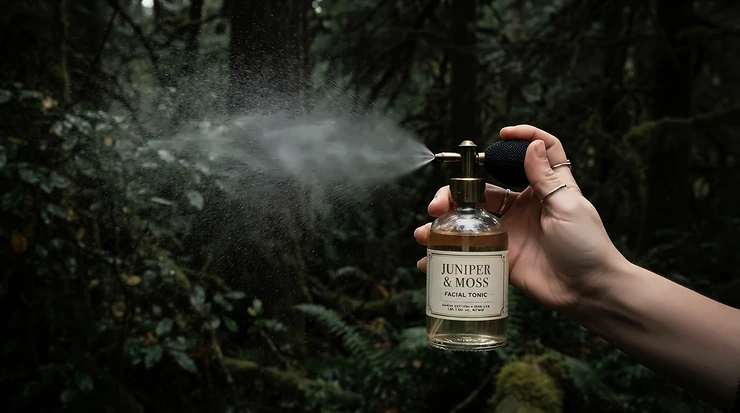
Frankincense essential oil perfume is a skin scent built around steam-distilled oil from Boswellia tree resin, usually diluted in a carrier oil rather than alcohol. It smells lemony, piney, balsamic and faintly smoky, and it wears closer to the skin than a spray. Think quiet church air, not a cloud.
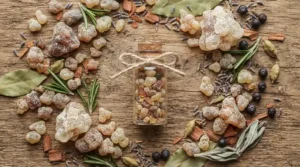
Frankincense, also called olibanum, is an aromatic resin that has been burned and distilled for thousands of years. It’s the backbone of nearly every incense fragrance you’ve ever caught in a cathedral, a candle shop or a niche perfume counter. Distil the resin and you get an oil that is peppery and citrus-bright up top, then settles into a balsamic, smoky hum.
Why now? October in Canada does something to our noses. The air thins, the scarves come out, and sugary gourmands start to feel like wearing dessert to a funeral. A frankincense essential oil perfume answers the mood: calm, dry, a little mysterious. It also rides the wider shift toward alcohol-free resinous scent formats and skin-hugging oils that whisper instead of shout.
Here’s the deal with this guide. Every pick below is a real product, but I haven’t worn them and won’t pretend otherwise. You’ll get spec-driven analysis, ingredient-list detective work and the genuine review sentiment I could verify. Prices appear as rough CAD ranges, and Amazon.ca stock shifts constantly, so check current listings before you commit.
Quick Comparison: 7 Frankincense Essential Oil Perfume Picks at a Glance
| Product | Format | Base | Alcohol-free? | Price range (CAD) | Best For |
|---|---|---|---|---|---|
| Plant Therapy Organic Frankincense Carterii Essential Oil | 10 mL undiluted oil | None (pure oil) | Yes | C$20–C$30 | Experienced oil users |
| Plant Therapy Frankincense Frereana Organic Essential Oil | 10 mL undiluted oil | None (pure oil) | Yes | C$30–C$45 | Lighter, cleaner profiles |
| Aura Cacia Frankincense Essential Oil Roll-On | 9.2 mL roller | Apricot kernel oil | Yes | C$12–C$20 | First-timers |
| Aromafume Frankincense Roll-On | 10 mL roller | Not disclosed | Not stated | C$18–C$25 | Layering fans |
| Zum Frankincense & Myrrh Eau de Zum | Roll-on cologne | Jojoba oil | Yes | C$20–C$30 | Gift givers |
| FSMWholesale Tunisian Frankincense Fragrance Oil | 5–30 mL rollers | Fragrance oil | Yes (per listing) | C$12–C$25 | Budget testers |
| Comme des Garçons Series 3 Incense Avignon | 50 mL eau de toilette | Alcohol | No | C$140–C$190 | Projection lovers |
Read the table as a spectrum. The two Plant Therapy bottles are raw material, so they cost the least per wear but demand the most care. Aura Cacia Frankincense Essential Oil Roll-On and Zum Frankincense & Myrrh Eau de Zum are the ready-to-wear middle, while Avignon sits alone as the alcohol-based, designer-priced benchmark. If you want a true pure essential oil perfume, the oils and Aura Cacia Frankincense Essential Oil Roll-On come closest, while FSMWholesale Tunisian Frankincense Fragrance Oil and Zum Frankincense & Myrrh Eau de Zum trade purity for staying power.
💬 Just one click — help others make better buying decisions too!😊
Top 7 Frankincense Essential Oil Perfume Picks: Expert Analysis
Each entry below turns spec-sheet facts into what you’d actually notice on your skin. Where I couldn’t verify real reviews, I say so rather than invent any.
1. Plant Therapy Organic Frankincense Carterii Essential Oil — the blender’s raw material
This one is a raw ingredient, not a finished perfume. That distinction matters. The 10 mL bottle holds undiluted, USDA-certified organic Boswellia carterii gum oil, and Plant Therapy says each batch carries GC-MS testing. A GC-MS report is a chemical fingerprint, so it tells you whether the oil matches what the label promises.
Wikipedia notes that carteri is now considered a synonym of Boswellia sacra, the classic frankincense tree. On skin, expect a bright, pine-and-lemon opening that softens into balsam. It’s gorgeous, but undiluted oil isn’t wearable straight from the bottle. Health Canada doesn’t recommend or approve DIY uses, so if you do dilute it, keep it light and patch-test first.
Reviews I could verify for Plant Therapy oils lean positive on value and packaging, though one reviewer wished the bottle spelled out where the oil comes from.
Pros:
- ✅ Single-ingredient, organic-certified oil
- ✅ Batch GC-MS testing backs purity claims
- ✅ A small bottle stretches across many applications
Cons:
- ❌ Needs dilution before it touches skin
- ❌ Some reviewers want clearer origin details
Expect roughly C$20–C$30. Verdict: strong value for experienced oil users, poor fit for anyone wanting grab-and-go.

2. Plant Therapy Frankincense Frereana Organic Essential Oil — the softer, cleaner cousin
Boswellia frereana grows in the Horn of Africa, and Wikipedia describes its resin as less bitter, with a less “heavy” incense character than Boswellia sacra. Translation: it’s the frankincense for people who find church-smoke scents oppressive. Think lemon peel on warm stone rather than a snuffed candle.
That lighter profile makes it more office-friendly and easier to wear in heated rooms, where heavy resins turn syrupy. It’s also the pricier of the two Plant Therapy frankincense oils in the listings I found, which makes sense for a niche species. Like its sibling, it’s undiluted, so the same dilution and patch-test caution applies.
I couldn’t verify enough reviews to characterize sentiment for this specific oil, so I won’t guess. What the spec comparison suggests is that it’s a sensible second bottle once you know you like frankincense. As a first purchase, the more common carterii gives you a better baseline.
Pros:
- ✅ Gentler, less bitter resin profile
- ✅ Suits offices and warmer weather
- ✅ Organic certification per the brand
Cons:
- ❌ Pricier than carterii and serrata siblings
- ❌ Undiluted, so not ready to wear
Expect roughly C$30–C$45. Verdict: worth it as an upgrade, not a starter.
3. Aura Cacia Frankincense Essential Oil Roll-On — pre-diluted and fuss-free
The ingredient list is refreshingly short: apricot kernel oil, Boswellia sacra oil and tocopherol (vitamin E). The 9.2 mL roller is pre-diluted, so the guesswork vanishes. Apricot kernel is a light carrier that absorbs without a greasy film, which suits a perfume you’ll swipe on before leaving the house.
The catch is projection. The one review I found on a Canadian retailer listing was a 2 out of 5, with the reviewer calling the scent faint and cheap-smelling. A single review isn’t a trend, but pre-diluted rollers generally do run quiet. The label’s directions also read like skincare rather than perfumery, so treat this as aromatherapy-adjacent fragrance products territory rather than a statement scent.
Still, for a nervous first-timer, a three-ingredient roller is hard to fault on transparency.
Pros:
- ✅ Three-ingredient list that’s easy to read
- ✅ Ready-to-wear roll-on format
- ✅ Light apricot kernel carrier
Cons:
- ❌ Faint projection, per the lone review found
- ❌ Directions lean skincare, not perfume
Expect roughly C$12–C$20. Verdict: low-risk entry point if you accept a whisper.
4. Aromafume Frankincense Roll-On — essential oil meets resin extract
Aromafume describes this 10 mL roller as essential oils blended with natural resin extracts, drawing on Boswellia carterii and Boswellia serrata. The scent is billed as balsamic and soft woody. Resin extracts are a smart move: they add body and lingering warmth that a thin oil dilution lacks.
Here’s what the marketing glosses over. Adding extracts means this isn’t a pure essential oil perfume, and the roller’s exact base and dilution aren’t disclosed in the listing I saw. The brand also leans heavily on emotional-wellness language. Treat that as marketing flavour, not a promise. Judge it as a fragrance, and it’s a pleasant layering candidate.
I couldn’t verify independent customer reviews for this specific roller, so there’s no sentiment to report. The brand does describe it as vegan and cruelty-free.
Pros:
- ✅ Resin extracts add depth beyond plain oil
- ✅ 10 mL is generous for a roller
- ✅ Vegan and cruelty-free per the brand
Cons:
- ❌ Base and dilution aren’t disclosed
- ❌ Wellness claims outrun the evidence
Expect roughly C$18–C$25. Verdict: decent value if you like a warmer, more resinous finish.
5. Zum Frankincense & Myrrh Eau de Zum — the crowd-pleasing pairing
Frankincense alone can feel austere. Add myrrh and you get sweetness and spice, which is why this pairing has endured for millennia. Zum (made by Indigo Wild) builds its roll-on cologne on jojoba oil, with no alcohol or phthalates according to the brand. The ingredients combine essential oils, fragrance oil, certified organic jojoba and vitamin E.
That fragrance oil is the tell. It likely gives this roller more staying power than a pure-oil dilution, but it also means the formula isn’t strictly a pure essential oil perfume. Jojoba is a stable carrier that resists going rancid, a practical edge for something you’ll carry in a bag.
I couldn’t verify independent reviews, only the brand’s own claim that it’s their top seller. Treat that as marketing, not evidence.
Pros:
- ✅ Alcohol-free jojoba base with a gentle feel
- ✅ Myrrh adds warmth and sweetness
- ✅ Compact roller travels easily
Cons:
- ❌ Contains fragrance oil, so not pure essential oil
- ❌ Oil-based rollers stay close to skin
Expect roughly C$20–C$30. Verdict: the best gift pick here, since it smells finished and polished.
6. FSMWholesale Tunisian Frankincense Fragrance Oil — the budget scent tester
This is a fragrance oil, not an essential oil, and that changes everything about how you read it. The listing I found offers 5 mL to 480 mL sizes, with roll-on options and alcohol-free, cruelty-free labelling. Because it’s a fragrance oil, it may be a blend of natural and synthetic components. The listing doesn’t say, so treat the formula as unknown.
What the price buys you is a low-stakes way to learn whether you like the frankincense-forward smell before spending more. One reviewer on the marketplace listing called the oil thick and fragrant and appreciated getting both a flip-top and roll-on applicator. That’s one voice, so weigh it lightly.
I found this listing on a marketplace, not Amazon.ca, so confirm availability and the seller before buying.
Pros:
- ✅ Cheapest way to test the scent
- ✅ Roll-on and flip-top applicators per a reviewer
- ✅ Sizes from 5 mL up to bulk
Cons:
- ❌ Fragrance oil, not pure essential oil
- ❌ Limited ingredient transparency
Expect roughly C$12–C$25. Verdict: a cheap experiment, not a long-term signature.
7. Comme des Garçons Series 3 Incense Avignon — the cathedral in a bottle
Launched in 2002 and composed by Bertrand Duchaufour, Avignon is the designer-priced benchmark. Retailer notes list Roman chamomile, cistus oil, elemi, incense, vanilla, patchouli, palisander and ambrette seeds. It opens with frankincense and myrrh, drifts into a smoky, resinous heart, then softens with dry vanilla and chamomile.
Because it’s an alcohol-based eau de toilette spray, it projects much further than any roller here. That’s the trade-off the others make visible: you gain complexity and reach, and lose the skin-close intimacy of an oil.
Reviewer sentiment is genuinely split. Some call it long-lasting, good frankincense; others say the current formulation fades quickly and sits muted compared with older bottles. One perfume-blog commenter speculated it contains little real olibanum, but that’s unverified. I couldn’t confirm Amazon.ca stock, and niche perfume from third-party sellers deserves an authenticity check.
Pros:
- ✅ Layered incense with dry vanilla
- ✅ Alcohol-based spray projects further
- ✅ Respected niche reputation
Cons:
- ❌ Mixed reports on current-batch performance
- ❌ Premium price and not alcohol-free
Expect roughly C$140–C$190. Verdict: buy it for the artistry, not for purity.
How to Wear Frankincense Essential Oil Perfume: A Practical Usage Guide
Buying the bottle is the easy part. Wearing it well is where a frankincense essential oil perfume either blooms or vanishes.
Start with a patch test: a dab on your inner forearm, then wait 24 hours. Essential oils can sensitize skin, and a reaction you ignore today can become a lifelong “allergy” to that oil. Health Canada’s guidance on essential oils and botanical extracts is blunt that natural doesn’t mean harmless and that the department doesn’t recommend or approve DIY uses.
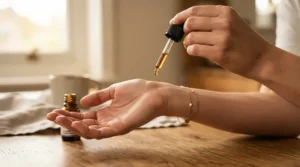
Then apply to moisturized skin, because oil clings to oil. Pulse points like wrists and the base of the throat work, since warmth helps the scent open. One or two swipes of a roller is plenty. These are intimate scents, not room-fillers.
Storage matters more than most people realise. Keep bottles capped tightly, away from sunlight and bathroom steam. Terpene-rich oils oxidize over time, and an oxidized oil smells flat and can irritate skin. Store everything away from children and pets.
The common first-30-days mistakes? Over-applying, expecting designer-spray projection, and wearing a new oil on fresh sunburn. Go gentle, reapply at lunch, and judge the scent after a week.
Real-World Scenarios: Matching Frankincense Essential Oil Perfume to Your Life
If you’re a Toronto office worker commuting 40 minutes by transit, you want quiet. Aura Cacia Frankincense Essential Oil Roll-On fits: a low budget (under C$20), daily wear and a scent that won’t bother cubicle neighbours. Expect to reapply at lunch.
If you’re a Calgary skier or winter hiker who wants something with backbone in minus-15 weather, a resin-forward oil like Aromafume Frankincense Roll-On earns its place. Cold air mutes fragrance, so a warmer, extract-boosted roller carries better than a thin dilution. It tucks into a jacket pocket, and heavy gloves won’t stop you rolling it on.
If you’re buying a gift for a friend who “doesn’t wear perfume,” Zum Frankincense & Myrrh Eau de Zum is the safe, polished choice. It smells finished, comes in an easy roller and carries a mid-range tag.
And if you’re a fragrance nerd who already owns three incense sprays, Avignon gives you a reference point to compare every oil against. Wear it on dinner nights, and keep a roller for everyday.
How to Choose Frankincense Essential Oil Perfume: 6 Steps
- Decide how finished you want it. Raw oil like Plant Therapy Organic Frankincense Carterii Essential Oil needs your effort; a roller is ready to wear.
- Check the ingredient list. Short and specific is good. “Fragrance” or “parfum” alone tells you little about what you’re buying.
- Know your species. Boswellia sources differ: frereana reads lighter and cleaner, sacra/carteri classic and balsamic, and some species are under pressure from overharvesting.
- Look for testing. GC-MS batch reports signal a brand willing to show its work.
- Match the format to your day. Oils whisper; sprays announce. Pick based on your workplace and climate.
- Patch-test before committing. Always. No exceptions, even for organic oils.
Whatever route you choose, remember that a good frankincense essential oil perfume should smell like resin, not like a pine air freshener. If it smells flat, thin or sharply chemical, the bottle’s story and the bottle’s contents may not match.
Natural Frankincense Fragrance Oil vs Pure Essential Oil: What’s Actually in the Bottle?
These two terms get tossed around as if they mean the same thing. They don’t. A pure essential oil is distilled straight from plant material. A fragrance oil is a composed scent, built from natural isolates, synthetic molecules or both, and then diluted into a base.
So when a label advertises natural frankincense fragrance oil, read carefully. “Natural” has no tightly policed meaning on a perfume label, and the phrase could describe an oil that’s mostly plant-derived or one that’s partly lab-made with a plant story on top. FSMWholesale Tunisian Frankincense Fragrance Oil is a clean example: affordable, convenient and honest about being a “fragrance oil,” but silent on its composition.
Neither choice is morally superior. Natural frankincense fragrance oil often delivers longer wear and a steadier scent from batch to batch, because perfumers can anchor it with stable molecules. A pure essential oil gives you the real botanical complexity, with natural variation from harvest to harvest.
Choose based on your priorities. If you want authenticity and don’t mind a quieter, shifting scent, go with the oil. If you want predictability and projection, a fragrance-oil product is perfectly reasonable, as long as you’re not paying pure-oil prices for a blend.
Alcohol-Free Resinous Scent: Why Oil-Based Wears Differently
Alcohol is a fragrance’s launchpad. It evaporates fast, flinging scent molecules into the air, which is why sprays have big openings and wide trails. Take it away and you get an alcohol-free resinous scent that sits on skin and melts with your body heat.
That intimacy is the draw. Oil-based frankincense feels softer, warmer and more personal, and it sidesteps the dryness some people feel from alcohol-heavy sprays.
| Feature | Alcohol-free oil roller | Alcohol-based spray |
|---|---|---|
| Projection | Skin-close, intimate | Wider trail |
| Opening | Soft, gradual | Bright, fast |
| Skin feel | Moisturizing | Can feel drying |
| Travel | Leak-resistant roller | Atomizer, bulkier |
| Best For | Aura Cacia Frankincense Essential Oil Roll-On, Zum Frankincense & Myrrh Eau de Zum | Comme des Garçons Series 3 Incense Avignon |
The table makes the trade-off plain. Oils reward patience and closeness, while sprays reward drama. If you want a scent only you and a hugging partner will notice, Zum Frankincense & Myrrh Eau de Zum is the logical pick; if you want the room to know you’ve arrived, Avignon does that job better.
Natural vs Synthetic Perfumery Ingredients: An Honest Take
The internet loves a villain, and “synthetic” gets cast as one far too often. Here’s a more grounded view of natural vs synthetic perfumery ingredients: both have strengths, and both have limits.
| Factor | Natural ingredients | Synthetic ingredients |
|---|---|---|
| Complexity | Layered, variable | Clean, consistent |
| Longevity | Often shorter | Often longer |
| Allergen risk | Natural components can be allergens | Varies by molecule |
| Sustainability | Overharvesting concerns for some resins | Less pressure on wild plants |
| Best For | Purists, aromatherapy fans | Reliable wear, budget buyers |
Natural doesn’t equal safe. Naturally occurring components in some essential oils can count as fragrance allergens under Canadian labelling rules. Synthetic doesn’t equal cheap or nasty either, since many classic perfumes depend on lab-made molecules to hold the scent together.
Interestingly, frankincense itself illustrates the point. Wikipedia notes that the main frankincense species face pressure from habitat loss and overexploitation, so a synthetic or semi-synthetic frankincense accord can actually be the more sustainable pick.
The takeaway: stop asking “is it natural?” and start asking “is it transparent?” A brand that lists what’s inside earns more trust than one that waves the word “natural” around.
Essential Oils in Fragrance Blending: Pairing Frankincense Like a Perfumer
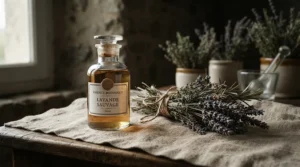
Understanding essential oils in fragrance blending explains why certain frankincense products smell richer than others. Perfumers think in a pyramid: top notes you notice first, heart notes that define the middle, and base notes that linger. Frankincense straddles all three. Its lemony opening reads as top, its balsamic body as heart, its smoky resinous tail as base.
That versatility makes it a bridge. Pair it with citrus like bergamot and the lemon facet brightens. Add myrrh, as Zum Frankincense & Myrrh Eau de Zum does, and the whole thing deepens and sweetens. Vanilla and benzoin push it toward comfort; cedar and vetiver push it toward dry, woody austerity, which is roughly the territory Avignon inhabits.
You don’t need to mix anything at home to benefit from this. Layering two finished products, say a frankincense roller under a light woody spray, does the same job with far less risk. If you’re tempted to blend raw oils, remember Health Canada’s DIY caution, keep dilutions low and patch-test every new combination.
Good blending is about restraint. Frankincense is a strong personality, and the best partners give it room to speak.
Pure Essential Oil Perfume Recommendations by Buyer Type
Here are my pure essential oil perfume recommendations, matched to the person rather than the product:
The curious beginner: start with Aura Cacia Frankincense Essential Oil Roll-On. It’s cheap, short on ingredients and pre-diluted.
The oil enthusiast: go for Plant Therapy Organic Frankincense Carterii Essential Oil, then graduate to Plant Therapy Frankincense Frereana Organic Essential Oil once you’ve built a baseline.
The gifter: Zum Frankincense & Myrrh Eau de Zum smells complete out of the box and doesn’t require a user manual.
The bargain tester: FSMWholesale Tunisian Frankincense Fragrance Oil lets you sample the scent for the price of a sandwich.
The sensitive-skin wearer: patch-test everything, favour simple ingredient lists and speak to a doctor or qualified aromatherapist if you’re pregnant, nursing or managing skin conditions.
On cost-per-wear, a 10 mL pure oil lasts far longer than it looks, because each application uses only drops of a diluted blend. A roller costs more per millilitre but removes the work. Neither beats a spray for pure drama, but both beat it for intimacy.
Aromatherapy-Adjacent Fragrance Products: Wellness Claims vs Perfume Reality
Walk the aisle and you’ll see it: bottles that blur the line between perfume and wellbeing. These aromatherapy-adjacent fragrance products borrow the language of calm, grounding and balance, and frankincense is a favourite for that purpose because of its spiritual heritage.
Be a sceptic here. Aromafume Frankincense Roll-On is a good example of a brand that pairs a pleasant scent with ambitious emotional promises. The fragrance may genuinely feel soothing, since smell and mood are tightly linked, but a pleasant mood isn’t a treatment. In Canada, claims about what a cosmetic can do must be accurate and not misleading.
My rule of thumb: enjoy the ritual, ignore the medical language. A frankincense roller applied slowly at your desk can be a lovely two-minute reset. That doesn’t make it a remedy.
If you buy this category, favour products whose labels are specific about ingredients and modest about outcomes. The ones that read like perfume notes are usually the ones telling the truth. The ones that read like prescriptions are usually selling a mood with a rulebook attached.
Safety, Regulations and Sustainability: A Canadian Guide
Canada regulates perfumes sold as cosmetics under the Cosmetic Regulations, and the rules recently tightened. Amendments published as SOR/2024-63 in the Canada Gazette require certain fragrance allergens to appear on labels when they exceed set thresholds. Per industry summaries, phase one applied from April 2026 for 24 allergens, with an expanded list rolling out to new products from August 2026 and existing products later. Timelines reported by different sources vary slightly, so check with the manufacturer.
What does that mean for you? Read the ingredient list. Frankincense products may name individual allergens after “parfum.” That’s useful information if you react to specific fragrance components.
A few practical safety points. Keep oils away from eyes, children and pets. Don’t ingest them. Avoid wearing essential oils on broken skin. Store them upright and capped.
Sustainability deserves a thought too. Wikipedia reports that the IUCN has flagged Boswellia sacra as near threatened, with broader threats from habitat loss and overharvesting. You can’t verify a supply chain from your couch, but you can favour brands that disclose sourcing, and you can avoid using more oil than you need.
FAQ
❓ How much frankincense essential oil perfume should I wear?
❓ Can sensitive skin handle frankincense essential oil perfume?
❓ Does oil-based perfume last as long as spray?
❓ Is a fragrance oil roller a good frankincense option on a budget?
❓ Where can I find frankincense perfume in Canada?
Conclusion
A frankincense essential oil perfume is one of the few scents that works as both fragrance and ritual. It’s old, it’s quiet, and it suits a Canadian autumn better than almost anything else on the shelf.
If I had to simplify the choice: pick Aura Cacia Frankincense Essential Oil Roll-On if you want an easy start, Zum Frankincense & Myrrh Eau de Zum if you want something polished and giftable, and Plant Therapy Organic Frankincense Carterii Essential Oil if you’re an experienced oil user who values purity and batch testing. Choose Plant Therapy Frankincense Frereana Organic Essential Oil for a lighter, cleaner profile, and Aromafume Frankincense Roll-On for resinous warmth. Reach for FSMWholesale Tunisian Frankincense Fragrance Oil to sample on a shoestring, and Avignon when you want incense with real projection.
Whatever you pick, read the ingredient list, patch-test, apply lightly and ignore the grand wellness promises. The best resin scent is the one that makes you pause, breathe and smell like yourself on a good day.
✨ Your perfect frankincense essential oil perfume is a few clicks away.
🔍 Click any highlighted product to check current pricing and availability, and start your own resin ritual today!
Recommended for You
- Frankincense Perfume For Women: 7 Stunning Picks In 2026
- Affordable Saffron Scented Perfume: 7 Best Picks Under C$100 In 2026
- Saffron Perfume For Special Occasions: 7 Stunning Picks 2026
Disclaimer: This article contains affiliate links. As an Amazon Associate, I earn from qualifying purchases. If you purchase products through these links, we may earn a small commission at no additional cost to you.
✨ Found this helpful? Share it with your friends! 💬🤗
